
Tree services in Folsom, CA
Plan removal, tree trimming or fallen-tree cleanup using the local checks below. For service scope, start with tree removal, trimming and pruning or storm damage work.
Tree services in Folsom



California local tree-work decisions
In Folsom, start by identifying the tree’s owner and the local decision you need: assessment, pruning, removal or disposal. Folsom requires a permit before removing protected trees, including native oaks, street trees, parking-lot shade trees, regulated development trees and designated landmarks.
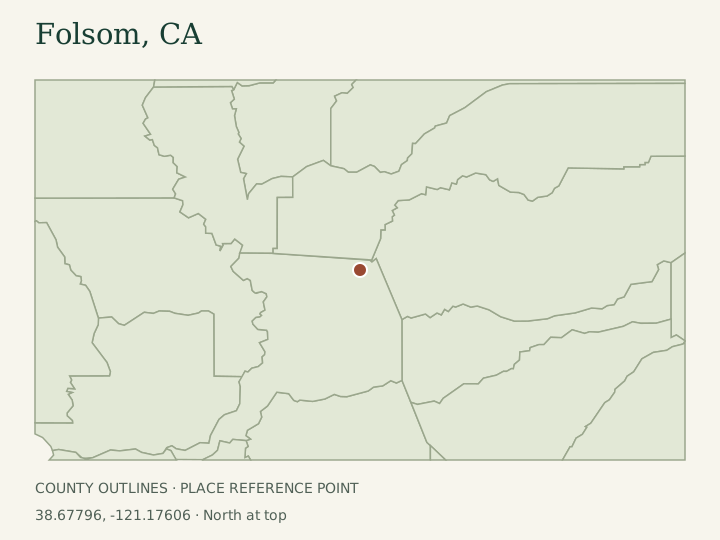
Establish the local authority and project conditions
Folsom requires a permit before removing protected trees, including native oaks, street trees, parking-lot shade trees, regulated development trees and designated landmarks. The current FAQ describes street-frontage trees generally within twelve and a half feet of the sidewalk edge. Ask the City arborist to classify the tree and any project conditions rather than relying only on whether the trunk is behind a fence. Applications use the eTRAKiT portal, with the actual approval conditions retained for the contractor. Approved removals can carry replacement planting or mitigation fees. Request a condition assessment and reasonable retention alternatives before buying a predetermined removal, especially where the permit decision depends on documented damage or decline. See the source instructions for the stated scope.
Separate private care from public-tree work
Folsom's current FAQ requires a tree-work permit for protected-tree pruning exceeding ten percent of the canopy or involving limbs two inches in diameter or larger. Mechanical support systems and activities potentially impacting protected roots also require review. These are local permit triggers, not instructions for an owner to cut up to a threshold. Describe the pruning objective and have the assessor specify the retained canopy. Topping and several other damaging practices are prohibited for protected trees. Include trenching, pool work or equipment impacts in the same inquiry so a canopy estimate does not omit root protection. Obtain the approved scope before agreeing a fixed work date and verify the proposed company's insurance and applicable qualifications. See the source instructions for the stated scope.
Choose an eligible destination before leaving wood
Folsom uses the green organics bin for yard waste and lists separate residential recycling instructions for the material it accepts. A bin service is suitable only for a qualifying load that can actually be contained; it does not establish acceptance of every trunk, root ball or commercial removal pile. The separate bulky-item program has item restrictions, including tree stumps in its excluded list. Ask Waste and Recycling to classify excess branches, large logs and the actual transporter before treating a household pickup allowance as the disposal plan. Have the estimate state who loads and transports the excluded material, what receiving route is confirmed and whether grindings remain. Keep tree work, stump grinding and ground restoration as separate outcomes. See the source instructions for the stated scope.
Keep routine arrangements distinct from storm response
Folsom's arborist FAQ identifies emergency situations such as storm damage or active tree failure as exceptions to ordinary permit requirements. That statement needs application to the actual hazard; it is not permission to remove every damaged protected tree without contacting the authority. Keep people clear, use emergency services for immediate threats and the serving utility for wires. Once safe, document the condition and ask the City arborist about required evidence, any follow-up and remaining work. Routine utility maintenance has its own encroachment and notification conditions. Separately establish private cleanup: a safety response does not guarantee stump collection, and the household bulky route's restrictions still need to be addressed in the recovery scope. See the source instructions for the stated scope.
Choose the right request and compare written scopes
If the condition of a tree is undecided, request an assessment before buying a predetermined removal. Identify whether the next step is retention advice, pruning, approved removal or hauling material that is already safely detached. Give bidders the same tree labels and access information, then request written inclusions for cutting, material transport, stump work and restoration. Confirm insurance and any required credentials directly. Keep the responsible authority’s instructions with the accepted scope, and record who addresses each excluded item. The linked quote-comparison guide develops this purchase checklist; the local sections here establish the municipal decisions that must come first.
A Folsom work-brief example
Use this as a planning example, not a report of a completed job. An owner plans a pool beside an oak and asks for a removal quote. Present the whole construction and root-impact plan to the City arborist. Compare assessment, retention measures and any approved removal conditions. Keep mitigation and hauling separate from the pool contractor's access assumptions.
Check the actual jurisdiction before transferring a plan
For a property in Roseville, use the Roseville tree-work overview to check that jurisdiction before transferring this plan. Roseville requires a Tree Permit for protected-tree removal unless a stated exemption applies. The location of the property determines the applicable procedure; these neighboring guides do not establish shared rules or provider coverage.
Before accepting the scope
- Authority: Folsom Community Development arborist services and Waste and Recycling: identify the tree, project and applicable decision.
- Scope: List assessment, pruning or removal separately from hauling and ground work.
- Access: Agree protection for surfaces, retained roots and shared routes.
- Material: Confirm the actual receiver, load category, transporter and collection date.
Questions about this work
Which local question should I resolve first?
Identify the property and the tree’s public or private status, then ask Folsom Community Development arborist services and Waste and Recycling about the relevant local process. Owner permission, a professional recommendation and an authority decision are separate.
Can I leave all removal material for routine collection?
Use the specific local material category and account eligibility. Folsom uses the green organics bin for yard waste and lists separate residential recycling instructions for the material it accepts. Ask the operator about large wood, stumps, contractor loads and the intended date before accepting an estimate that leaves them.
How do I compare companies without a local price claim?
Give bidders the same tree labels, authority information, access constraints and desired finish. Request itemized written scopes and verify insurance and required qualifications directly. The comparison should resolve differences in work and cleanup before comparing totals.
Sources and scope
Checked: October 31, 2026. Procedures follow the named city/borough or county. State rules, utility work and receiving instructions retain their specific geography and eligibility. Dated documents are identified in the text; confirm current requirements for the actual property and load. Work-brief examples are hypothetical planning aids. No site inspection, individual contractor verification or receiver admission has been completed for your project.
Nearby field guides
Great-circle distances between GeoNames place points, not driving distances or service coverage. Showing up to eight nearest published guides.
Preparing your local map…
The map loads automatically as you approach it. City links work without JavaScript.
Distances between GeoNames place points, not driving distances or service coverage. US Census January 2025 state/county boundaries, not municipal limits. Points: GeoNames, CC BY 4.0. Map interface: Leaflet.