
Tree services in Raleigh, NC
Plan removal, tree trimming or fallen-tree cleanup using the local checks below. For service scope, start with tree removal, trimming and pruning or storm damage work.
Tree services in Raleigh



North Carolina tree-work decisions
In Raleigh, identify who controls the tree before asking for cutting quotes, and arrange hauling before work starts. A street-side tree can need City review, while contractor-generated branches are excluded from ordinary yard pickup. Use the removal, pruning and storm guides for the work you actually need.
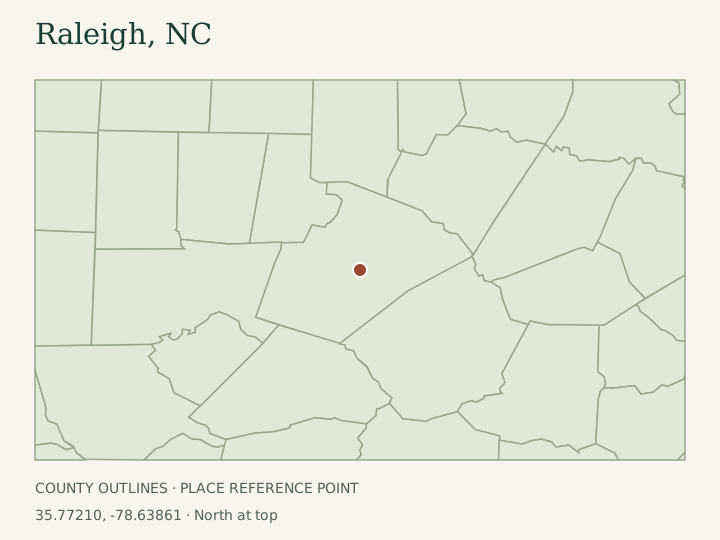
Start with the tree's location and authority
A tree beside your driveway is not necessarily yours to authorize. Raleigh's Tree Impact Permit guidance explains that public right-of-way width varies; a fixed measurement from the curb does not settle the boundary. Ask Urban Forestry for help when ownership is unclear. Bring an address, a photograph from a safe location and a sketch showing the sidewalk, road and trunk. Do not order work on an assumed boundary.
The Urban Forestry program manages City property, including street rights-of-way, parks and greenways. Its tree-service request route covers street-tree pruning and removal. A request asks the City to evaluate its responsibility; it does not authorize your contractor to cut. For a private tree, separately check applicable site protections, recorded conditions and association requirements rather than treating this public-tree procedure as a universal private-yard permit rule.
Choose an assessment, pruning or removal brief
Describe the problem before choosing the operation. A branch touching a roof suggests a different inspection from a changing lean, trunk split or planned addition. Record what changed, which area people use and whether there is a structure or line nearby. Photographs help explain the request, but they cannot establish structural stability, root condition or a safe work method.
Ask the assessor whether retaining the tree with defined pruning and follow-up is a reasonable option. If removal is recommended, ask what makes a smaller intervention inadequate. If pruning is appropriate, identify branches or objectives and the canopy to retain. Avoid a request to remove an arbitrary percentage merely to make the tree look shorter. Keep ground-level brush clearing separate from work in a standing canopy.
Include nearby City trees in the access plan
Raleigh's impact-permit process also addresses trucks, equipment and stored materials within a City tree's critical root zone. Consequently, a private removal can require coordination even when the target tree is not public: the proposed machine route or temporary wood stack may affect a City tree. Show these activities to the reviewer instead of describing only the trunk being removed.
Walk through access with bidders from a safe position. Identify gates, surface changes, parked vehicles, retained planting and proposed loading locations. Ask each bidder to describe protection and restoration responsibilities. Do not approve a convenient equipment route across someone else's land without permission. A smaller gate or protected root area can change the work plan even when two trees appear similar in height.
Settle the material route before signing
The City's yard-waste preparation page excludes waste from contracted jobs and land clearing. Cutting a contractor's branches into shorter pieces does not turn them into ordinary eligible household waste. Require the written quote to say whether branches, trunk wood, chips and stump material leave the property. If you want some wood retained, specify where and in what manageable form without obstructing access or drainage.
The Yard Waste Center is a separate resident drop-off option with charges and load restrictions; it excludes commercial loads. Its existence is not a hauling plan for a hired crew. Ask the contractor to name an appropriate commercial receiving route and confirm acceptance of the actual material and vehicle. Stump grinding also needs its own finish description: grindings, excavation, backfill and lawn repair are different tasks.
Use a three-part request to compare proposals
Prepare one brief with three parts: the tree decision, the site constraints and the final condition. For example, ask for an assessment of a private backyard tree, identify uncertain street-tree roots along the access route, and request complete hauling with stump work priced separately. Send the same information to every bidder so a cheaper proposal can be compared with the same obligations.
Record who handles review, when permission must be in place and what happens if the inspector changes the work limits. Verify the business and insurance information directly before engaging a crew. TreeWorkGuide publishes source-based planning; this page does not establish an available contractor, a response time or a site-specific tree diagnosis. Keep copies of the recommendation, accepted proposal and relevant correspondence.
Questions about this work
Can Raleigh inspect a tree near the street?
Use the Urban Forestry request route and ask for a City-tree determination. Right-of-way width varies, so proximity to the curb alone is insufficient. An inspection request and a permit application have different purposes; confirm which one your proposed work needs.
Will the City collect branches from my hired tree crew?
Routine curbside rules exclude contracted work. Include an eligible hauling route in the agreement even if the branches fit ordinary preparation limits. Resident drop-off and commercial disposal are separate eligibility questions.
Which guide should I read after a storm?
Use the storm-damage guide when there are fallen or damaged trees, hanging branches or line concerns. Keep away from unstable material and electrical hazards; urgent threats belong with emergency responders or the line operator before routine quotes and cleanup.
Nearby field guides
Great-circle distances between GeoNames place points, not driving distances or service coverage. Showing up to eight nearest published guides.
Preparing your local map…
The map loads automatically as you approach it. City links work without JavaScript.
Distances between GeoNames place points, not driving distances or service coverage. US Census January 2025 state/county boundaries, not municipal limits. Points: GeoNames, CC BY 4.0. Map interface: Leaflet.