
Tree services in Chapel Hill, NC
Plan removal, tree trimming or fallen-tree cleanup using the local checks below. For service scope, start with tree removal, trimming and pruning or storm damage work.
Tree services in Chapel Hill



North Carolina tree-work decisions
Chapel Hill tree work needs a current Town review and a realistic material plan. Since July 1, 2026, even small loose yard-trimming piles require separately paid collection; large logs, stumps and lot-clearing debris are outside ordinary pickup. Establish the tree's ownership and proposed service before arranging the work.
Distinguish a Town tree from private landscape work
The Town tree page provides a reporting route for tree concerns on Town or public property. It describes review before public-tree removal, rather than giving an adjoining owner authority to order it. If a trunk or work area may be public, report the location and ask for a determination before a private crew is engaged. A postal address and a view from the sidewalk do not settle every boundary.
The same page links the Tree Protection Ordinance and canopy-measurement resources through Planning. Use those current entry points to ask about your parcel and proposed operation. Keep association or neighboring-owner consent separate from municipal review. Do not use an old draft ordinance, a different Chapel Hill in another state or a county-wide instruction as a substitute for the Town's applicable determination.
Give Planning the actual project type
Chapel Hill's commercial-permits page lists tree work within Limited Review Administrative Zoning Compliance Permit categories. That is commercial/non-residential application context, not a universal instruction for every existing residential yard. Explain whether the project is an individual home, commercial property, new development or work tied to construction, and ask which current process applies.
Send the tree location, reason for work, photographs taken safely and a sketch of access and retained vegetation. Ask what evidence, permission and protection are needed before scheduling. A complete description helps avoid separate assumptions by the reviewer and contractor. Keep the response with the accepted work scope and make any conditions available to bidders before they price the operation.
Choose between assessment, pruning, removal and hauling
If the tree's condition is uncertain, start with an assessment that compares retention and removal. If the issue is one branch conflict, ask for a specific pruning objective and the canopy to preserve. If detached brush is the only task, request hauling explicitly. After a storm, suspended branches, unstable trees and electrical concerns need hazard routing before routine cleanup workers enter.
Ask the assessor to explain the recommendation and any follow-up, rather than accepting the amount of wood removed as proof of value. The linked service guides develop these different briefs. They do not establish a local contractor, appointment or response time, and this publisher's research is not a site-specific diagnosis. Verify the engaged business and its insurance information directly before work.
Update household cleanup assumptions for July 2026
The Town trash and yard-waste page states that yard trimmings use Town-issued yard carts under the July 1, 2026 changes. Loose piles of any size are now a separately paid service. Do not rely on older advice that a small loose brush pile will be included in ordinary weekly pickup. Use the address eligibility information and current Town instructions for the actual material.
The page lists loose-branch limits under four feet long and ten inches in diameter and excludes large logs, stumps and lot-clearing debris. These conditions make a complete removal materially different from a household trimming project. Confirm contractor-origin eligibility instead of assuming that every pile qualifies merely because the household receives Town trash collection. Include hired hauling where public service does not fit.
Compare the whole finish, including retained-tree protection
Ask every bidder for the same tree decision, access restrictions and completion standard. For removal, distinguish branch hauling, trunk wood, stump treatment and grindings. For pruning, distinguish canopy objectives and branch cleanup. For storm work, distinguish immediate clearance from remaining-tree assessment and later restoration. This keeps a cutting-only bid from being compared with a much broader finished project.
Plan the route around retained trees and approved site conditions before machinery or stacked wood affects them. If you retain material, mark its agreed location and form. Ask a hired hauler to confirm the receiving operator, actual material and vehicle acceptance before loading. Record who handles review, protection, scope changes and final ground repair so the finished job is something both owner and contractor can recognize.
Questions about this work
Is a small loose brush pile still part of weekly collection?
The current Town page says loose piles of every size became separately paid collection from July 1, 2026. Check present instructions and eligibility for your address and material rather than using an older small-pile exemption.
Does the commercial tree-work listing apply to my home?
The listing is in the commercial/non-residential permit context. Ask Planning to identify the correct path for the actual residential, development or other project. Do not infer either universal permission or a universal permit requirement from that page alone.
Can my tree crew remove a public tree I reported?
A report asks the Town to evaluate its tree. It does not authorize private cutting. Obtain a responsibility determination and the applicable instruction before including public-tree work in a contractor's scope.
Nearby field guides
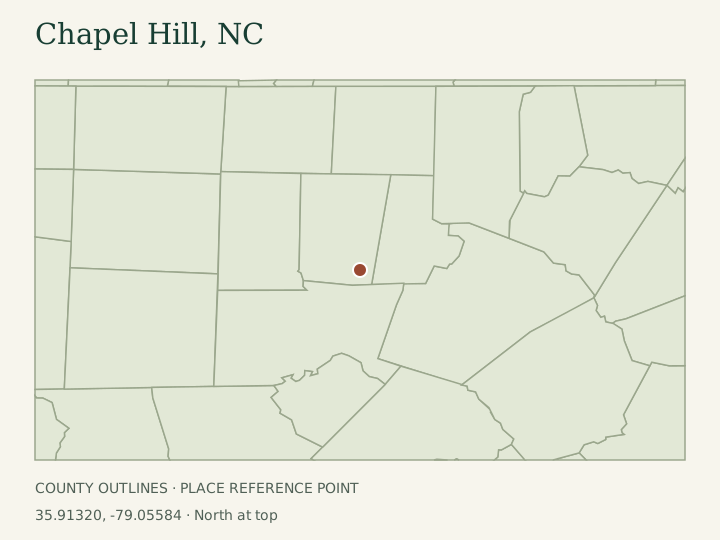
Great-circle distances between GeoNames place points, not driving distances or service coverage. Showing up to eight nearest published guides.
Preparing your local map…
The map loads automatically as you approach it. City links work without JavaScript.
Distances between GeoNames place points, not driving distances or service coverage. US Census January 2025 state/county boundaries, not municipal limits. Points: GeoNames, CC BY 4.0. Map interface: Leaflet.