
Tree services in Largo, FL
Plan removal, tree trimming or fallen-tree cleanup using the local checks below. For service scope, start with tree removal, trimming and pruning or storm damage work.
Tree services in Largo



Florida local tree-work decisions
In Largo, start by identifying the tree’s owner and the local decision you need: assessment, pruning, removal or disposal. Largo’s downloadable Tree Removal Application separates residential from non-residential use and requests the tree species, reason for removal, owner authorization and a site plan or survey showing removals and proposed replanting.
Establish the local authority and project conditions
Largo’s downloadable Tree Removal Application separates residential from non-residential use and requests the tree species, reason for removal, owner authorization and a site plan or survey showing removals and proposed replanting. The file name contains 2019, so use the current Planning & Development Services entry point to confirm the right submission version and applicable requirements. Do not infer a current fee or exemption from that filename or an older code PDF. The form is useful for preparing a consistent tree inventory, but an owner signature does not establish approval. Explain whether the request is connected with development and whether the property is actually within Largo. The City’s current planning page links its Civic Access portal and codified Comprehensive Development Code. See the source instructions for the stated scope.
Separate private care from public-tree work
Largo’s current Planning & Development Services page supplies the City’s codified development-code link and planner contact route. Use that route to resolve protected vegetation, development conditions and public-tree questions for the actual pruning proposal. An older City Chapter 10 PDF appears in search results, but the archived direct link returned 404 during this review. Use the current codified text and the planner’s response rather than historic diameter or canopy provisions as the basis for the job. Identify the species and pruning objective, disclose any construction and ask which review applies. Have the bidder distinguish routine retained-tree care from root disturbance or vegetation alteration associated with site work. The confirmed material rule is clearer: tree-service contractor debris is excluded from residential collection. See the source instructions for the stated scope.
Choose an eligible destination before leaving wood
Largo’s current Bulky & Yard Waste page places routine eligible yard waste on the designated recycling day. Material must be bagged or bundled; bundles must stay within four feet in length or width and weigh less than 50 pounds. The page describes a five-cubic-yard weekly yard-waste limit and a separate bulky category for amounts above five through ten cubic yards. Crucially, it excludes tree-service, landscaping and land-clearing generators from residential setout: those generators must arrange their own disposal. Do not apply the residential volume allowance to a company’s job. The same page requires space from overhead wires and nearby objects and keeps piles out of sidewalks, streets, swales and drainage areas. Confirm the staging point before accepting a crew’s proposed finish. See the source instructions for the stated scope.
Keep routine arrangements distinct from storm response
Largo’s routine collection rules help identify what a recovery contract should not leave unassigned. Contractor-generated tree waste is excluded from residential pickup, and mixed trash, recycling and bulky items must not be combined with yard material. A storm pile may contain several of those categories. A current special storm program could have separate instructions, but the ordinary collection page does not prove that such a program is active. Check City emergency updates and Solid Waste for the event and address before excluding hauling. Where a standing tree, suspended limb or wire remains, first use the appropriate emergency, utility and assessment route; collection eligibility does not make damaged material safe to handle. Keep drainage and pedestrian routes clear of any agreed staging area. See the source instructions for the stated scope.
Choose the right request and compare written scopes
If the condition of a tree is undecided, request an assessment before buying a predetermined removal. Identify whether the next step is retention advice, pruning, approved removal or hauling material that is already safely detached. Give bidders the same tree labels and access information, then request written inclusions for cutting, material transport, stump work and restoration. Confirm insurance and any required credentials directly. Keep the responsible authority’s instructions with the accepted scope, and record who addresses each excluded item. The linked quote-comparison guide develops this purchase checklist; the local sections here establish the municipal decisions that must come first.
A Largo work-brief example
Use this as a planning example, not a report of a completed job. A resident has a tree proposed for removal near future paving and already has branches from a landscape company at the curb. Prepare the site plan for Planning & Development, including the proposed paving and tree. Separately require the company to resolve its excluded debris. The application decision and the hauling responsibility are independent; neither a submitted plan nor the residential volume allowance settles both.
Use the procedure for the actual municipality
A Clearwater property uses Clearwater’s construction-linked removal and public-tree reporting routes. Largo’s application and collection limits do not transfer across the City boundary. For property there, continue with the Clearwater tree-work overview. These are separate jurisdictions and the links do not establish provider coverage.
When Florida’s documented residential-risk route matters
Florida Statute 163.045 applies to a specifically defined single-family detached residential property and a signed on-site risk assessment by an ISA-certified arborist or Florida-licensed landscape architect. Its unacceptable-risk condition is narrower than an owner’s concern or a removal estimate. The statute also retains a mangrove-authority exception. Ask the qualified assessor to address the actual criteria, keep the signed documentation and resolve uncertainty about the parcel or scope before scheduling non-urgent work. A weather event, dead-looking foliage or a contractor’s verbal assurance does not itself document eligibility. Where the route does not apply, use the applicable municipal review. This is a state provision rather than a City-issued approval. Read the current Florida statute.
Before accepting the scope
- Authority: Largo Planning & Development Services and Solid Waste: identify the tree, project and applicable decision.
- Scope: List assessment, pruning or removal separately from hauling and ground work.
- Access: Agree protection for surfaces, retained roots and shared routes.
- Material: Confirm the actual receiver, load category, transporter and collection date.
Questions about this work
Which local question should I resolve first?
Identify the property and the tree’s public or private status, then ask Largo Planning & Development Services and Solid Waste about the relevant local process. Owner permission, a professional recommendation and an authority decision are separate.
Can I leave all removal material for routine collection?
Use the specific local material category and account eligibility. Largo’s current Bulky & Yard Waste page places routine eligible yard waste on the designated recycling day. Ask the operator about large wood, stumps, contractor loads and the intended date before accepting an estimate that leaves them.
How do I compare companies without a local price claim?
Give bidders the same tree labels, authority information, access constraints and desired finish. Request itemized written scopes and verify insurance and required qualifications directly. The comparison should resolve differences in work and cleanup before comparing totals.
Sources and scope
Checked: November 3, 2026. Municipal instructions apply within the named City. Florida law, utility work and receiving instructions have separate scopes and eligibility. Dated documents are identified in the text; confirm current requirements for the actual property and load. Work-brief examples are hypothetical planning aids. No site inspection, individual contractor verification or receiver admission has been completed for your project.
Nearby field guides
Great-circle distances between GeoNames place points, not driving distances or service coverage. Showing up to eight nearest published guides.
Preparing your local map…
The map loads automatically as you approach it. City links work without JavaScript.
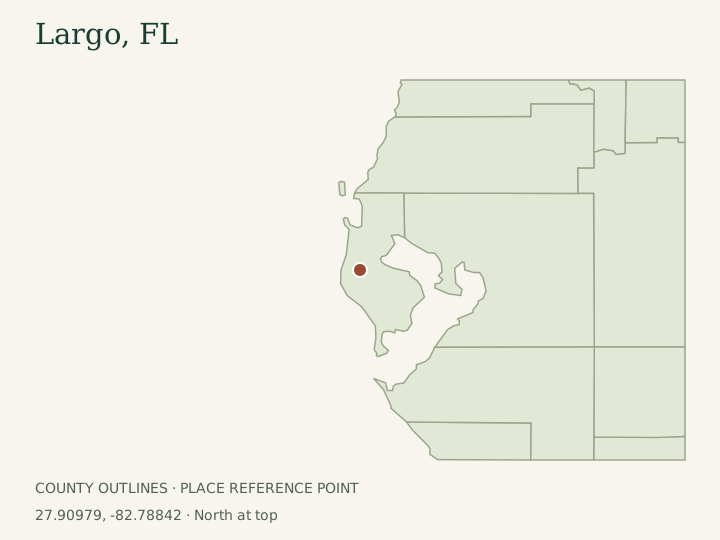
Distances between GeoNames place points, not driving distances or service coverage. US Census January 2025 state/county boundaries, not municipal limits. Points: GeoNames, CC BY 4.0. Map interface: Leaflet.