
Tree services in Kenosha, WI
Plan removal, tree trimming or fallen-tree cleanup using the local checks below. For service scope, start with tree removal, trimming and pruning or storm damage work.
Tree services in Kenosha



Wisconsin local tree-work decisions
In Kenosha, start by identifying the tree’s owner and the local decision you need: assessment, pruning, removal or disposal. Kenosha’s code index identifies a dedicated Forestry chapter with separate Forestry Permit and Tree Protection provisions.
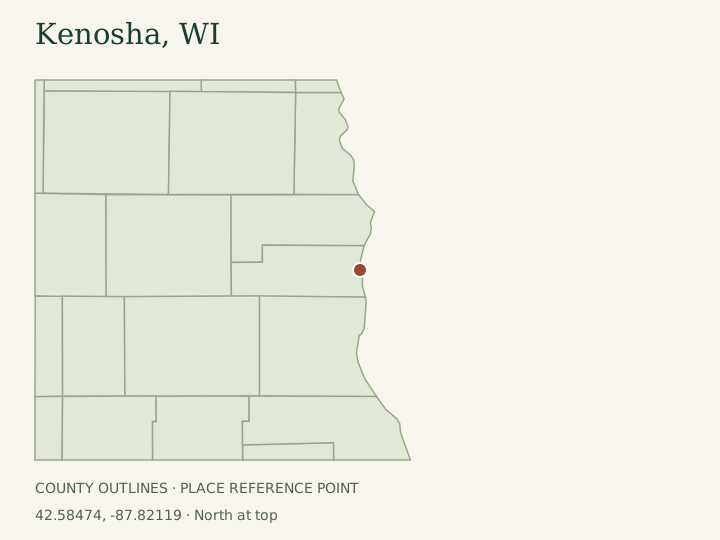
Establish the local authority and project conditions
Kenosha’s code index identifies a dedicated Forestry chapter with separate Forestry Permit and Tree Protection provisions. Use the City Forester to determine which current provision applies to the tree, parcel and activity. The City’s downloadable general-ordinance PDF is an older compilation; its presence alone is not proof of the current application or an exemption. Kenosha County’s separate tree-clearing FAQ is not a substitute for a City of Kenosha determination. See the source instructions for the stated scope.
Separate private care from public-tree work
For a pruning project in Kenosha, identify whether the tree is in a lawn park, public right-of-way or private parcel before specifying work. Ask Parks to establish the relevant City review rather than borrowing a neighboring municipality’s public-tree rule. Wisconsin DNR recommends winter oak pruning and cautions against wounding oaks from April through July. That state disease-prevention guidance helps schedule an assessment; it does not establish a City permit, a diagnosis or permission to cut a particular tree. See the source instructions for the stated scope.
Choose an eligible destination before leaving wood
A City of Kenosha release carried by Kenosha News on April 6, 2026 identifies the resident Compost/Brush Drop-Off Site at 4071 88th Avenue. It requires residency identification and excludes commercial disposal and contractor dumping. The release describes unbundled branches up to six inches across and twelve feet long at the site. This is a resident material route, not free disposal capacity for a company’s removal contract; ask about the exact load before transport. See the source instructions for the stated scope.
Keep routine arrangements distinct from storm response
The same 2026 City release describes scheduled bundled-brush collection from May through November, requested at least 24 hours before the normal waste day. Bundles are three-foot lengths, tied with string or twine, and no more than 40 pounds. It does not announce unlimited storm collection. Keep immediate hazard assessment separate from preparing detached material, and arrange private hauling for logs or project volumes outside confirmed municipal acceptance. See the source instructions for the stated scope.
Choose the right request and compare written scopes
If the condition of a tree is undecided, request an assessment before buying a predetermined removal. Identify whether the next step is retention advice, pruning, approved removal or hauling material that is already safely detached. Give bidders the same tree labels and access information, then request written inclusions for cutting, material transport, stump work and restoration. Confirm insurance and any required credentials directly. Keep the responsible authority’s instructions with the accepted scope, and record who addresses each excluded item. The linked quote-comparison guide develops this purchase checklist; the local sections here establish the municipal decisions that must come first.
A Kenosha work-brief example
Use this as a planning example, not a report of a completed job. A contractor offers to remove a large tree but leaves all wood for the resident site. Before accepting, verify the City’s tree-work requirements and the actual material sizes, transporter and commercial-load restriction. A contractor cannot assume that an owner’s proof of residence authorizes its dumping. Price an accepted alternate route for excluded wood.
Check the municipality before transferring a plan
If the property is in neighboring Racine, use the Racine tree-work guide before transferring this work plan. Racine’s removal page describes the City’s public-tree decisions: City arborists inspect the public inventory and generally limit removals to dead, dying or dangerous trees. The responsible municipality and its procedures follow the actual property; this comparison does not imply shared rules or provider coverage.
Before accepting the scope
- Authority: City of Kenosha Department of Parks and City Forester: identify the tree, project and applicable decision.
- Scope: List assessment, pruning or removal separately from hauling and ground work.
- Access: Agree protection for surfaces, retained roots and shared routes.
- Material: Confirm the actual receiver, load category, transporter and collection date.
Questions about this work
Which local question should I resolve first?
Identify the property and the tree’s public or private status, then ask City of Kenosha Department of Parks and City Forester about the relevant local process. Owner permission, a professional recommendation and an authority decision are separate.
Can I leave all removal material for routine collection?
Use the specific local material category and account eligibility. A City of Kenosha release carried by Kenosha News on April 6, 2026 identifies the resident Compost/Brush Drop-Off Site at 4071 88th Avenue. Ask the operator about large wood, stumps, contractor loads and the intended date before accepting an estimate that leaves them.
How do I compare companies without a local price claim?
Give bidders the same tree labels, authority information, access constraints and desired finish. Request itemized written scopes and verify insurance and required qualifications directly. The comparison should resolve differences in work and cleanup before comparing totals.
Sources and scope
Checked: October 25, 2026. Procedures follow the named municipality. State guidance, county receiving information and operator instructions retain their stated geography and eligibility. Dated documents are identified in the text; confirm current requirements for the actual property and load. Work-brief examples are hypothetical planning aids. No site inspection, individual contractor verification or receiver admission has been completed for your project.
Nearby field guides
Great-circle distances between GeoNames place points, not driving distances or service coverage. Showing up to eight nearest published guides.
Preparing your local map…
The map loads automatically as you approach it. City links work without JavaScript.
Distances between GeoNames place points, not driving distances or service coverage. US Census January 2025 state/county boundaries, not municipal limits. Points: GeoNames, CC BY 4.0. Map interface: Leaflet.