
Tree services in Rye, NY
Plan removal, tree trimming or fallen-tree cleanup using the local checks below. For service scope, start with tree removal, trimming and pruning or storm damage work.
Tree services in Rye



New York tree-work decisions
In the City of Rye, tree work can involve the Building Inspector, Planning Commission or Tree Foreperson depending on ownership and project scope. Confirm that jurisdiction first, then plan cutting and debris handling as one complete project.
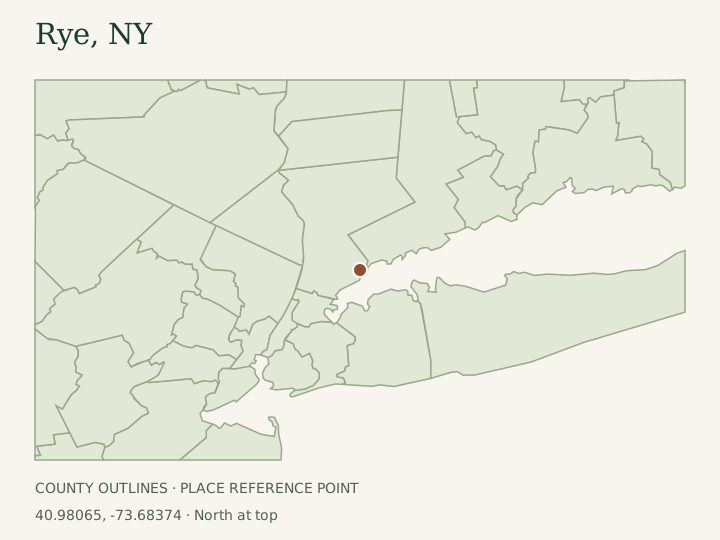
Use City of Rye rules for a City of Rye parcel
The City of Rye is distinct from the Town of Rye, Rye Brook and similarly named places in other states. Check the parcel's municipality rather than relying only on a mailing label. The City's tree definitions use eight inches DBH for a protected tree and thirty inches for a significant tree, measured 54 inches above ground on the uphill side.
Those categories help screen a private removal, but do not resolve it by themselves. For a property in neighboring New Rochelle, use its tree-work overview instead. That City's resident-arranged street-tree route has different replacement and stump requirements. A contractor operating in both places should still identify the authority and approval applying to your tree.
Understand why private removal review can change
Under Chapter 187's private-tree process, removal of protected or significant trees requires application to the Building Inspector. Lot size, the number and category of trees removed within a twelve-month period, and any development connection affect the review. Applications exceeding the ordinary limits or involving land development can go to the Planning Commission.
The City application asks about prior permits, wetlands, construction, large trees and neighboring property, and requests a tree-location plan plus contractor licensing and insurance. Prepare that information before comparing removal proposals. If the purpose can be achieved while retaining a tree or modifying the design, ask the assessor and designer to explain the option rather than treating the first cutting quote as the decision.
Public-tree work and pruning use a different gate
The City-tree provisions require Tree Foreperson approval for pruning and other treatment of City trees. They specify ANSI pruning standards and prohibit topping. A private-tree removal application is not a substitute for permission to alter a City tree, and a routine lawn-maintenance arrangement does not grant that authority.
For a pruning request, identify the branch conflict and intended canopy retained. For storm work, separate immediate danger from later restoration. Chapter 187 allows the City Manager to suspend requirements temporarily after severe weather, but that power is not evidence that a current suspension exists. Use emergency services and the electrical operator for immediate threats, then confirm the applicable City instructions before nonurgent work.
Arrange material handling beyond small bundles
The yard-organics rules allow eligible branches no more than four inches thick in tied bundles up to three feet long, eighteen inches across and fifty pounds. Trunks, stumps and other substantial wood are excluded. Check the current DPW calendar and instructions rather than assuming that any woody pile is ordinary household organics.
Ask each bidder to identify the destination for excluded wood, the stump finish, any planting obligations and protection of retained trees. A City-tree removal also has specific debris, stump and grading provisions that should be carried into the work scope. Compare the complete finish, keeping actual receiving acceptance, permit conditions and contractor availability separate from an online estimate or directory listing.
Questions about this work
Is the eight-inch threshold a permission to remove smaller trees anywhere?
No. It defines one category in the City tree chapter. Public ownership, wetlands, land-use approvals and project conditions may still matter. Ask the appropriate City office about the parcel and full scope rather than inferring a universal exemption.
Can a storm automatically suspend the tree rules?
No. Chapter 187 gives the City Manager power to issue a temporary suspension. Confirm whether an actual current action applies. A past storm notice, neighboring City's exemption or contractor statement does not establish a waiver here.
What should I include when requesting a quote?
Identify the trees on a sketch, the recommendation, lot and approval information, access constraints and the proposed final condition. State whether stump removal, planting, haulage and restoration belong in the price, and keep public-tree permission explicit.
Nearby field guides
Great-circle distances between GeoNames place points, not driving distances or service coverage. Showing up to eight nearest published guides.
Preparing your local map…
The map loads automatically as you approach it. City links work without JavaScript.
Distances between GeoNames place points, not driving distances or service coverage. US Census January 2025 state/county boundaries, not municipal limits. Points: GeoNames, CC BY 4.0. Map interface: Leaflet.