
Tree services in Peekskill, NY
Plan removal, tree trimming or fallen-tree cleanup using the local checks below. For service scope, start with tree removal, trimming and pruning or storm damage work.
Tree services in Peekskill



New York tree-work decisions
Peekskill's tree decisions depend on its current preservation code, including a locally defined measurement height and distinct emergency exemptions. Use that review before contracting for removal, and make debris preparation part of the work brief.
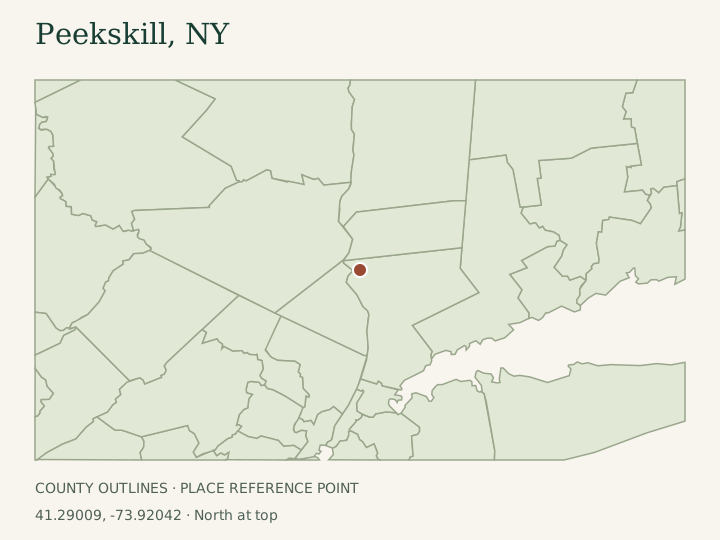
Identify the tree and measure for the correct rule
The current Chapter 530 generally regulates private-tree removal at six inches DBH or greater. Its DBH definition measures at three feet above ground. That differs from the familiar breast-height convention used in many other places, so do not import a neighboring municipality's measurement into the application. Have the assessor record the tree identity and measurement method for the Building Inspector.
Identify whether the site is actually in the City of Peekskill and whether a regulated wetland or other land-use approval is involved. A postal address does not extend City rules into a neighboring jurisdiction. If the project belongs to Tarrytown, use the Tarrytown tree-work overview; that Village measures its qualifying private-tree threshold at a different height and uses its own approval process.
Match the service to the evidence
For planned removal, ask for a written reason and alternatives. A defect assessment may support removal, pruning or monitoring depending on the tree and target. For pruning, define the desired clearance or structural objective and retained canopy. For storm debris already on the ground, determine whether the job is simply hauling or also an assessment of standing trees.
Chapter 530 gives certain maintenance pruning an exemption, conditioned on preserving the tree's basic nature and avoiding excessive reduction in overall size and height. That condition is not a recommendation to cut the maximum allowed. Ask the arborist for a restrained, species-appropriate scope that solves the actual problem. Keep any change from pruning to removal explicit so the approval and cleanup plan can be revised.
Distinguish two different hazard pathways
The code separates an actual ongoing emergency needing immediate removal to protect life or property from a nonemergency hazardous-tree exemption. The latter requires a written ISA-certified arborist determination submitted to the Building Inspector before removal. A tree described as dead is therefore not automatically a paperwork-free planned job.
Give the Inspector a clear account of the condition and intended work, retaining the submitted assessment and any response. For danger affecting people or wires, use emergency services and the relevant operator immediately rather than relying on a routine application. City Services also takes reports about defective City-owned trees and road debris, with a separate after-hours Public Works route.
Specify disposal as part of the project
The solid-waste code describes prepared woody material cut no longer than four feet and tied in bundles no more than two feet across for ordinary collection. Confirm current collection instructions, quantity and contractor eligibility with City Services. This rule should not be stretched into a promise that a full tree, dirty rootball or truckload will be accepted.
A useful quote states whether the crew prepares a confirmed eligible pile or loads and hauls everything. Ask for the receiving route for larger wood and roots, the stump finish and whether grindings remain. For work tied to a permit, include the approved replacement plan or fee arrangements and completion steps. The end condition should match the approval, not merely the moment the last branch reaches the ground.
Questions about this work
Is Peekskill's DBH measured at four and a half feet?
The current Chapter 530 definition uses three feet above ground. Ask the assessor to use that local definition in permit documentation. Other tree-care measurements can be useful, but should not be substituted silently for the City's threshold calculation.
Does a written hazard assessment always mean an emergency?
No. The code has separate provisions. The nonemergency exemption needs the specified arborist determination submitted before removal. An actual ongoing emergency is a different condition; route immediate danger promptly and document the circumstances safely.
What makes a contractor proposal comparable?
It identifies the same trees, recommendation, approval status, access, retained-tree protection and material finish. Include replacement and stump obligations where relevant. A quote for cutting only is not equivalent to one completing hauling, planting and surface repair.
Nearby field guides
Great-circle distances between GeoNames place points, not driving distances or service coverage. Showing up to eight nearest published guides.
Preparing your local map…
The map loads automatically as you approach it. City links work without JavaScript.
Distances between GeoNames place points, not driving distances or service coverage. US Census January 2025 state/county boundaries, not municipal limits. Points: GeoNames, CC BY 4.0. Map interface: Leaflet.