
Tree services in Tarrytown, NY
Plan removal, tree trimming or fallen-tree cleanup using the local checks below. For service scope, start with tree removal, trimming and pruning or storm damage work.
Tree services in Tarrytown



New York tree-work decisions
Tarrytown tree work starts with the Village's tree-permit process, including qualifying private trees and substantial pruning. Match the approved work to the actual tree, then choose a cleanup route that keeps brush out of leaf piles.
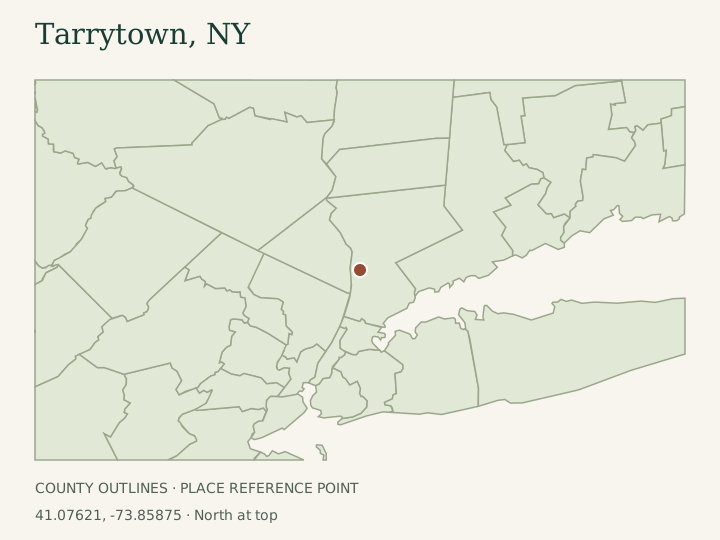
Check the Village jurisdiction before requesting a permit
Use the property address and parcel information to confirm that the site is in the Village of Tarrytown. A nearby postal label or a contractor's service-area list does not establish who approves the work. The Village tree code gives public-tree oversight to DPW and a role to the Tree Warden. It also regulates private trees exceeding four inches in diameter measured four feet six inches above ground.
That private-tree scope is materially different from simply asking whether a tree is in a street strip. Bring a sketch and photographs identifying both the proposed work and trees retained nearby. If the property is actually within White Plains, start with the White Plains tree-work guide; its Forestry and Gedney disposal instructions should not be substituted for Tarrytown's Village process.
Decide between assessment, pruning and removal
Describe the problem before specifying the solution: an obstructed path, a damaged union, a canopy conflict or an intended construction footprint. Ask whether an assessment could resolve uncertainty before committing to cutting. A tree that interferes with a proposed driveway may present a design choice; one with an active structural failure presents a safety problem. The two requests should not enter the conversation under the same vague “cleanup” description.
A pruning proposal should define the desired result and retained canopy. A removal proposal should identify the reason, the approved tree and the stump/debris finish. If the work is linked to site-plan, subdivision or zoning review, ask which authority handles the tree decision. Chapter 281 distinguishes those pathways; another permit should not be assumed to authorize cutting by itself.
Use current instructions without ignoring source differences
The Village application guidance calls for an approved tree permit before protected removal or substantial pruning and describes registered Green Contractor work. The code separately addresses limited vista pruning and topping. The handout is stricter in its language about topping than the code's exceptional permit provision. Have DPW resolve the actual proposal rather than choosing the easier-sounding sentence from either document.
For hazardous conditions, the code provides an immediate-approval route through the Superintendent of Public Works or designee. It is not a homeowner-declared waiver. Keep people away from unstable trees, and use emergency services and the line operator for immediate threats. Record the authority's instructions and any follow-up requirements with the project file.
Plan organics separately from the leaf collection
The live yard-waste page and 2026 packet describe Thursday collection with holiday or operational exceptions. The packet permits tied branches up to four inches thick in bundles no longer than three feet, and excludes logs and stumps. The 2026 information packet separately says leaf piles mixed with twigs or brush will not be collected. The old indexed FAQ uses different dimensions and its URL now returns Page Not Found. Use the live page and annual packet; confirm any uncertainty with DPW before preparing a pile.
For a small pruning job, resident preparation might be practical if DPW confirms eligibility. For a full removal or thick-wood job, require a named hauling arrangement and confirm receiving acceptance before cutting. A truck route that works for small organics may not accept roots, heavy logs or mixed debris. Decide whether chips, grindings and surface repair remain in the quote, and photograph the agreed access route before equipment arrives.
Questions about this work
Does a private yard automatically avoid Village review?
No. Chapter 281 regulates qualifying private trees as well as public trees. Ask DPW about the tree and work proposed, including substantial pruning. The diameter threshold is part of the review, not a complete property-specific permission decision.
Is a Green Contractor registration the same as permission for my tree?
No. Contractor eligibility and the project's approval are separate. Check both before scheduling. A registered contractor should still work to the approved tree list and scope rather than using registration as a substitute for a permit.
What is the most useful first message to DPW?
Provide the parcel, a safely obtained photograph, the tree's location, the proposed work and whether another land-use application is involved. Say clearly if the concern is hazardous. Ask what review applies and what evidence the Village needs before work.
Nearby field guides
Great-circle distances between GeoNames place points, not driving distances or service coverage. Showing up to eight nearest published guides.
Preparing your local map…
The map loads automatically as you approach it. City links work without JavaScript.
Distances between GeoNames place points, not driving distances or service coverage. US Census January 2025 state/county boundaries, not municipal limits. Points: GeoNames, CC BY 4.0. Map interface: Leaflet.