
Tree services in Newark, DE
Plan removal, tree trimming or fallen-tree cleanup using the local checks below. For service scope, start with tree removal, trimming and pruning or storm damage work.
Tree services in Newark



Delaware tree-work decisions
Newark tree work needs two plans: one for the tree and any municipal electric lines, and another for the resulting wood. The city distinguishes routine utility trimming from customer-requested and storm work, with different cleanup responsibilities. Green Wednesday carts and household bulk collection cannot be treated as interchangeable outlets for a large removal.
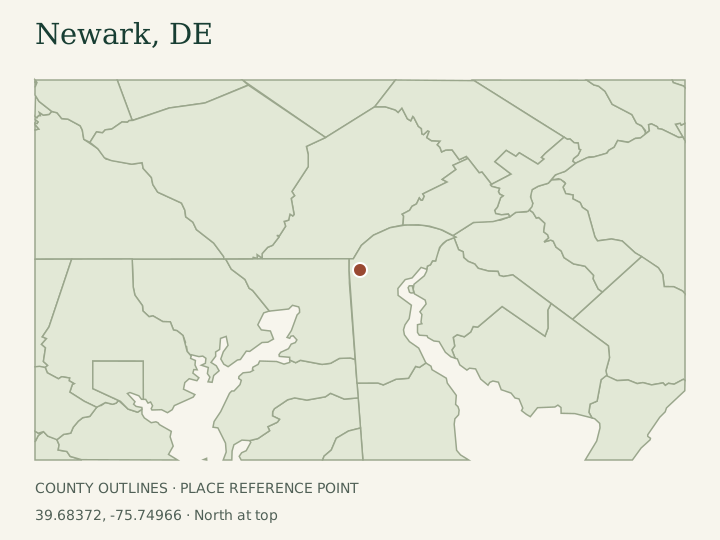
Confirm Newark, Delaware and the actual property
Start with the street address and municipal jurisdiction. Search results for Newark can refer to New Jersey, and a Delaware postal address can extend beyond the municipal service area. Identify the tree owner, any association-managed ground, and the operator of nearby lines before requesting a particular city service.
Newark's Electric Department operates a municipal system. That makes local utility coordination different from assuming every northern Delaware line belongs to Delmarva Power. Use your actual service information and the city's guidance; a map point or a tree-service advertisement cannot verify the line serving your property.
Use the electric tree-work specifications early
The city's tree-trimming specifications require contact before trimming or removal near power lines. Show the line conflict in the assessment request and ask who will coordinate the work. Do not plan to solve an electrical obstruction by having an ordinary tree crew work around it informally.
The city discusses protective measures and possible service arrangements for its system. These are operator decisions, not homeowner instructions. Ask what private work can follow the utility's action, what scheduling conditions apply, and whether charges may arise under the particular arrangement.
Choose the tree service by its purpose
For clearance or a damaged limb, ask whether selective pruning can achieve the objective while retaining the tree. For a possible structural or root problem, request an assessment explaining the concern and alternatives. For a fallen tree, distinguish stable material on the ground from a remaining suspended or unstable section.
The Delaware forestry program recommends trained, insured, appropriately equipped tree workers and provides an arborist search. Verify who will assess the tree and who will perform the agreed operation. Request a brief that names the tree and desired result rather than a loosely defined day of tree work.
Know when utility work includes cleanup
Newark's specifications say its routine contract trimming includes removal and chipping of limbs and debris. Customer-requested work and emergency storm electrical work have different provisions: wood and brush can remain the homeowner's responsibility. Ask which category applies before assuming a utility visit completes the property work.
That distinction changes the next contractor's assignment. You may need assessment of the remaining tree, loading and hauling of wood already cut, or both. Describe each separately. Material left by a line crew is not evidence that the homeowner should move it while electrical or tree hazards remain unresolved.
Fit the debris route to the load
Under Green Wednesday rules, eligible residential yard waste must fit within city-provided carts with the lids shut. Nothing outside the carts is collected. The bulk-item program explicitly excludes yard waste, so a household furniture appointment is not a workaround for a trunk or large brush pile.
Commercial properties and apartments arrange their own separated yard-waste hauling. For an alternative, consult DNREC's receiving directory, then confirm the proposed material and customer eligibility with the receiver. The city mulch pickup location is not an authorized dumping area for your contractor's wood.
Make the final brief usable by the crew
Combine the tree recommendation, any authority direction, utility coordination, equipment access, and cleanup endpoint in one record. Note gates, overhead conflicts, retained trees, and surfaces that need protection. For removal, separate stump treatment and grindings; for pruning, identify the canopy and clearance to retain.
Ask each bidder to price the same endpoint. For example, a proposal that leaves all logs is different from one that includes loading, an accepting receiver, and final cleanup. Document who pays if the planned outlet rejects the load. Keeping responsibilities visible before work helps avoid a property full of material after the tree issue has been addressed.
Questions about this work
Will a bulk pickup remove my tree debris?
The city bulk-item list excludes yard waste of any kind. Use an eligible yard-waste arrangement or a confirmed hauling route instead of scheduling a household-item pickup for logs or branches.
Does the municipal utility always chip the branches?
The city distinguishes routine contract trimming from customer-requested and emergency electrical work. Routine trimming includes cleanup; other categories can leave brush and wood with the homeowner. Confirm the actual category and remaining hazards.
Can I use the free mulch site to drop off branches?
No dumping is allowed at the city mulch pickup location. Use a current authorized receiving route and verify its material, origin, vehicle, and customer restrictions before transporting anything.
Nearby field guides
Great-circle distances between GeoNames place points, not driving distances or service coverage. Showing up to eight nearest published guides.
Preparing your local map…
The map loads automatically as you approach it. City links work without JavaScript.
Distances between GeoNames place points, not driving distances or service coverage. US Census January 2025 state/county boundaries, not municipal limits. Points: GeoNames, CC BY 4.0. Map interface: Leaflet.