
Tree services in Phoenix, AZ
Plan removal, tree trimming or fallen-tree cleanup using the local checks below. For service scope, start with tree removal, trimming and pruning or storm damage work.
Tree services in Phoenix



Arizona local tree-work decisions
In Phoenix, start by identifying the tree’s owner and the local decision you need: assessment, pruning, removal or disposal. Phoenix Street Transportation publishes corner-lot visibility and encroachment rules that affect a tree-work brief before a price is compared.
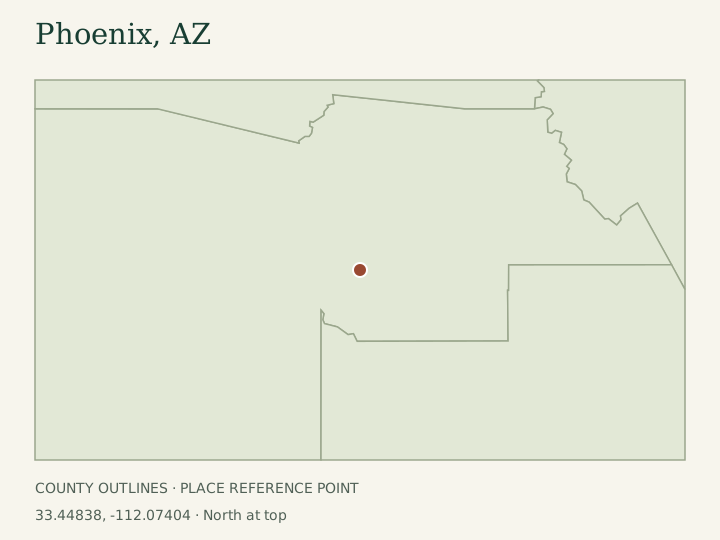
Establish the local authority and project conditions
Phoenix Street Transportation publishes corner-lot visibility and encroachment rules that affect a tree-work brief before a price is compared. Its page explains that vegetation on private property may not obstruct signs, signals, public passage or drainage. It also describes a bounded notice process for specified interferences. Describe the actual obstruction and ask the City to identify the required remedy; a clearance problem does not automatically mean whole-tree removal. For City property, a public corridor or approved development landscaping, establish ownership and applicable review separately. Keep the authority response with tree labels and the assessor's recommendation. The visibility page cannot establish a blanket exemption for every private removal proposal. See the source instructions for the stated scope.
Separate private care from public-tree work
A Phoenix pruning objective should describe the sight line, pedestrian route, traffic sign or drainage feature that needs to remain clear. The City's corner-lot page uses an intersection triangle and height limits; those should be applied to the actual street layout by the relevant authority rather than guessed from a photograph. Ask the assessor how to achieve the required clearance while retaining appropriate canopy. Arizona Forestry's care page links species-specific guidance, including citrus and deciduous shade trees, so one pruning calendar is not suitable for every tree. Resolve utility involvement first. Put access protection and the agreed branch-disposal outcome in the written scope alongside the clearance result. See the source instructions for the stated scope.
Choose an eligible destination before leaving wood
Phoenix now uses appointment-based bulk collection rather than an old quarterly neighborhood calendar. The current page gives four annual collection opportunities and a ten-cubic-yard pile limit, with prepared tree trimmings under twelve inches in diameter and four feet long. It also restricts large trunks and stumps. Confirm the actual appointment before setout and ask how paid-work material is classified. The separate tan green-organics subscription accepts some yard materials but excludes palm fronds and several contaminants. A palm-pruning cleanup cannot simply be directed to that container. Require the bidder to name an accepted route for every excluded material and keep residual raking or sweeping explicit. See the source instructions for the stated scope.
Keep routine arrangements distinct from storm response
Phoenix's current bulk scheduler blocks Halloween, Thanksgiving, Christmas and New Year's Day plus seven days after each holiday. That matters to late-October cleanup planning: a regular residential booking is not immediate storm response. Do not begin a curb pile on an assumed quarterly date or combine several households' debris into a community pile without the approved arrangement. Keep immediate hazards and wires with emergency responders or the actual utility; schedule private assessment and detached-material transport separately. Ask Public Works whether a current incident notice changes routine rules. If no specific expansion accepts the load, retain a private hauling line and a staging arrangement that preserves streets, sidewalks and drainage. See the source instructions for the stated scope.
Choose the right request and compare written scopes
If the condition of a tree is undecided, request an assessment before buying a predetermined removal. Identify whether the next step is retention advice, pruning, approved removal or hauling material that is already safely detached. Give bidders the same tree labels and access information, then request written inclusions for cutting, material transport, stump work and restoration. Confirm insurance and any required credentials directly. Keep the responsible authority’s instructions with the accepted scope, and record who addresses each excluded item. The linked quote-comparison guide develops this purchase checklist; the local sections here establish the municipal decisions that must come first.
A Phoenix work-brief example
Use this as a planning example, not a report of a completed job. A Phoenix owner wants corner-lot visibility restored and palm fronds removed. Ask Street Transportation about the actual sight-line issue and an assessor about retained canopy. Then distinguish a booked bulk collection from the tan-organics container, which excludes palm fronds.
Use the guide for the actual municipality
For a property in Tempe, use the Tempe tree-work overview to check that jurisdiction before transferring this plan. Tempe's public tree-and-shade portal describes an inventory of trees on City property and facilities, with location and condition attributes that are periodically updated. The location of the property determines the applicable procedure; these neighboring guides do not establish shared rules or provider coverage.
Before accepting the scope
- Authority: Phoenix Street Transportation and Public Works: identify the tree, project and applicable decision.
- Scope: List assessment, pruning or removal separately from hauling and ground work.
- Access: Agree protection for surfaces, retained roots and shared routes.
- Material: Confirm the actual receiver, load category, transporter and collection date.
Questions about this work
Which local question should I resolve first?
Identify the property and the tree’s public or private status, then ask Phoenix Street Transportation and Public Works about the relevant local process. Owner permission, a professional recommendation and an authority decision are separate.
Can I leave all removal material for routine collection?
Use the specific local material category and account eligibility. Phoenix now uses appointment-based bulk collection rather than an old quarterly neighborhood calendar. Ask the operator about large wood, stumps, contractor loads and the intended date before accepting an estimate that leaves them.
How do I compare companies without a local price claim?
Give bidders the same tree labels, authority information, access constraints and desired finish. Request itemized written scopes and verify insurance and required qualifications directly. The comparison should resolve differences in work and cleanup before comparing totals.
Sources and scope
Checked: October 27, 2026. Procedures follow the named municipality. State guidance, county receiving information and operator instructions retain their stated geography and eligibility. Dated documents are identified in the text; confirm current requirements for the actual property and load. Work-brief examples are hypothetical planning aids. No site inspection, individual contractor verification or receiver admission has been completed for your project.
Nearby field guides
Great-circle distances between GeoNames place points, not driving distances or service coverage. Showing up to eight nearest published guides.
Preparing your local map…
The map loads automatically as you approach it. City links work without JavaScript.
Distances between GeoNames place points, not driving distances or service coverage. US Census January 2025 state/county boundaries, not municipal limits. Points: GeoNames, CC BY 4.0. Map interface: Leaflet.